When people think of Wyoming, they often picture open landscapes, ranches, mountains, and small communities. Near Cody and Powell, however, a World War II incarceration camp tells a different story: one about Japanese Americans, constitutional rights, and people brought to Wyoming against their will.
I chose this subject because it reveals a meaningful and difficult connection between Wyoming and Japan. Heart Mountain is not simply Japanese history taking place in Wyoming. It is also American history, shaped by war, racial prejudice, and government decisions. It raises questions that remain important today: Who belongs? What happens when fear influences public policy? And how should a community remember a painful past?
## Table of Contents
– From Pearl Harbor to Heart Mountain
– Building a Life Behind Barbed Wire
– Citizenship, Military Service, and Resistance
– Wyoming and Japan: A Connection Beyond the Camp
– A Reflection and Why This History Matters
– Conclusion
## At a Glance
– **Location:** Park County, northwestern Wyoming, between Cody and Powell
– **Opened:** August 1942
– **Peak population:** 10,767 people, on January 1, 1943
– **Closed:** November 10, 1945
## From Pearl Harbor to Heart Mountain
On December 7, 1941, Japan attacked Pearl Harbor, bringing the United States into World War II. Fear and suspicion toward people of Japanese ancestry spread, particularly along the West Coast. On February 19, 1942, President Franklin D. Roosevelt signed Executive Order 9066. It authorized the military to designate areas from which people could be excluded. The order did not name Japanese Americans, but it became the basis for their mass removal from the West Coast.
Approximately 120,000 people of Japanese ancestry were forced from their homes and incarcerated at government camps. Around two-thirds were American citizens. Families had little time to prepare. Many had to sell homes, businesses, farms, and belongings quickly, often at a serious financial loss. They were first sent to temporary assembly centers and then transported to one of ten larger incarceration sites.
Heart Mountain began receiving people in August 1942. Its population reached 10,767 by January 1, 1943, making it one of Wyoming’s largest communities at the time. The camp operated until November 10, 1945. Nearly 15,000 people passed through it during its operation, including those transferred from other camps.
## Building a Life Behind Barbed Wire
The camp was built on dry land in the Shoshone River Valley. It contained hundreds of buildings, including barracks, a hospital, schools, offices, and shared dining and bathing facilities. Rooms were small and offered little privacy. Families also faced dusty summers, severe winter cold, and strong winds.
Yet the people held at Heart Mountain continued building community. They organized schools, religious services, sports, clubs, and activities. The *Heart Mountain Sentinel*, the camp newspaper, reported daily events. Residents worked in the hospital, schools, administration, and agriculture.
Agriculture became an especially important part of camp life. Incarcerated farmers cultivated crops on surrounding land, using their knowledge and hard work to produce food in a challenging environment. The agricultural work was not simply a sign of self-sufficiency. It also demonstrated the skills and experience that Japanese American farmers brought with them, even though the government had taken away their freedom.
I find this contrast particularly striking. The government treated these people as a group to be controlled, yet they continued to teach children, care for neighbors, grow food, and create community. Their ability to adapt should be recognized, but it should never be used to make the incarceration itself seem less harmful. Resilience does not make an injustice acceptable.
## Citizenship, Military Service, and Resistance
Heart Mountain also became an important place in the debate over citizenship and loyalty. Many residents were Nisei—American-born children of Japanese immigrants. They were U.S. citizens, but their freedom had been restricted because of their ancestry.
In 1944, the government reinstated the draft for Japanese American men. Some residents questioned how the government could imprison their families and deny their constitutional rights while demanding that they serve in the military. At Heart Mountain, the Fair Play Committee organized resistance to the draft. Eighty-five men were convicted and imprisoned for refusing induction.
Their decision should be understood in the context of the choices they faced, rather than reduced to a simple question of patriotism or disloyalty. Some Japanese Americans volunteered or served when drafted. More than 800 men connected to Heart Mountain served in the U.S. military, including members of the 442nd Regimental Combat Team, a highly decorated Japanese American unit. Others believed that demanding equal treatment before military service was itself an expression of their rights as Americans.
These different responses show that the Japanese American community was never a single, uniform voice. People made difficult decisions based on their beliefs, family responsibilities, and experiences. Remembering that diversity makes the history more honest.
## Wyoming and Japan: A Connection Beyond the Camp
Heart Mountain is often described as a chapter in Japanese American history, but it is also part of Wyoming’s local history. The camp changed the region’s population and economy, while its presence brought Japanese American lives into contact with people who already lived in the Bighorn Basin.
The relationship was not uniformly welcoming. Some local residents feared the arrival of Japanese Americans, while others interacted with people in and around the camp. Japanese American families had lived in northwestern Wyoming before the war; local histories document farmers, workers, and professionals connected to the region. The Wyoming–Japan story therefore began before the camp and continued after it closed.
After the war, returning to the West Coast was difficult. Many families had lost property and livelihoods, and prejudice continued. Some Japanese Americans rebuilt their lives elsewhere, including in Wyoming. The camp’s agricultural legacy also remained in the region, where irrigation systems and farming knowledge contributed to later agricultural use.
In 1988, the U.S. government passed the Civil Liberties Act, acknowledging that the wartime incarceration had been unjustified and was driven by racial prejudice, wartime hysteria, and a failure of political leadership. The law provided an official apology and redress to eligible survivors. This recognition did not undo what happened, but it marked an important step in the country’s effort to confront its actions.
## A Reflection and Why This History Matters
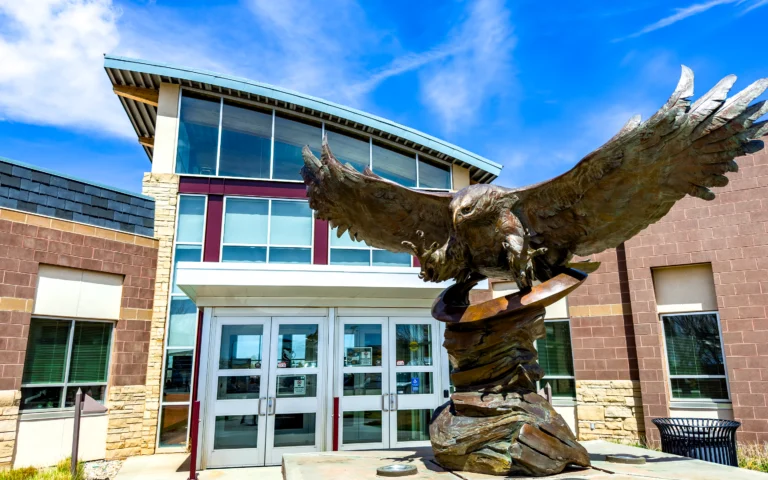
Today, the Heart Mountain Interpretive Center preserves this history through photographs, artifacts, oral histories, and exhibits. It gives visitors an opportunity to encounter the experiences of people who lived behind the fences, rather than seeing the site only as a date and a statistic.
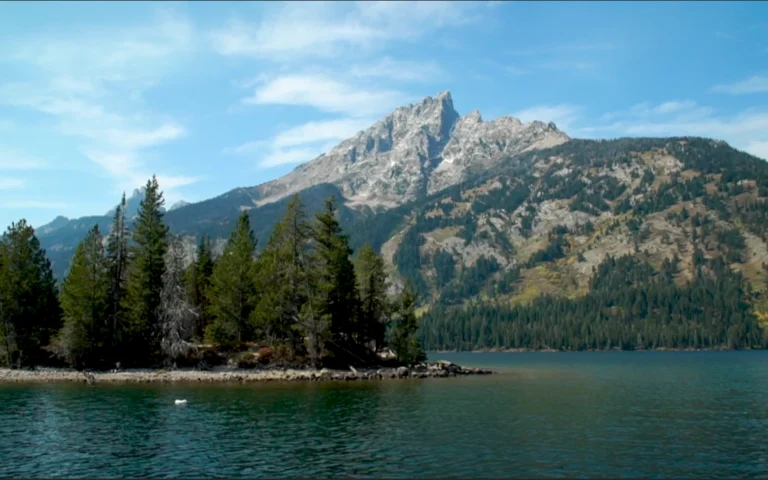
As I read the accounts and history of Heart Mountain, I was reminded that history is not distant or limited to another generation. This happened here, in Wyoming. The landscape visitors may admire today was once the setting for the forced confinement of thousands of people.
What stays with me is the contradiction between the ideals of freedom and equality and the treatment of Japanese Americans during the war. Many were citizens with homes, jobs, children, and ordinary plans for the future. Their ancestry made them targets of suspicion, and the government took away their freedom without individual evidence of wrongdoing.
For me, the connection between Wyoming and Japan is therefore not only about cultural exchange or friendship. It is also about a shared responsibility to remember, to ask difficult questions, and to understand how communities can be affected by decisions made in times of fear. Learning this history can help us approach one another with greater care and curiosity.
## Conclusion
Heart Mountain is part of Wyoming’s history, America’s history, and the history of Japanese Americans. It tells a story of injustice, but also of community, perseverance, disagreement, and the effort to rebuild. By preserving the stories of those who were incarcerated and making them accessible to new generations, Wyoming helps ensure that this chapter is not forgotten.
For JASWY, sharing the story of Heart Mountain is one way to deepen the connection between Wyoming and Japan. Discovering the past, connecting it to the present, and sharing what we learn can help build a more thoughtful and welcoming future.
## References and Further Reading
– [Heart Mountain Wyoming Foundation – History](https://heartmountain.org/history/)
– [Heart Mountain Wyoming Foundation – Draft Resisters](https://heartmountain.org/draft-resisters/)
– [University of Wyoming American Heritage Center – Heart Mountain](https://www.uwyo.edu/ahc/collections/topics/heart-mountain.html)
– [National Park Service – Heart Mountain Relocation Center](https://www.nps.gov/places/heart-mountain-relocation-center.htm)
– [Heart Mountain Wyoming Foundation – Interpretive Center](https://heartmountain.org/interpretive-center/)

Max Umurzakov
Holds a Master's degree in American Studies from the University of Wyoming. With an interest in American history, culture, and international relations, he explores the historical and cultural connections between Wyoming and Japan. At JASWY, he researches and shares lesser-known stories that highlight the ties between the two regions and promote cultural exchange and mutual understanding.
Author postsApril 26, 2026 (Last Update: November 10, 2026)
Posted By Max Umurzakov / Category: Culture